
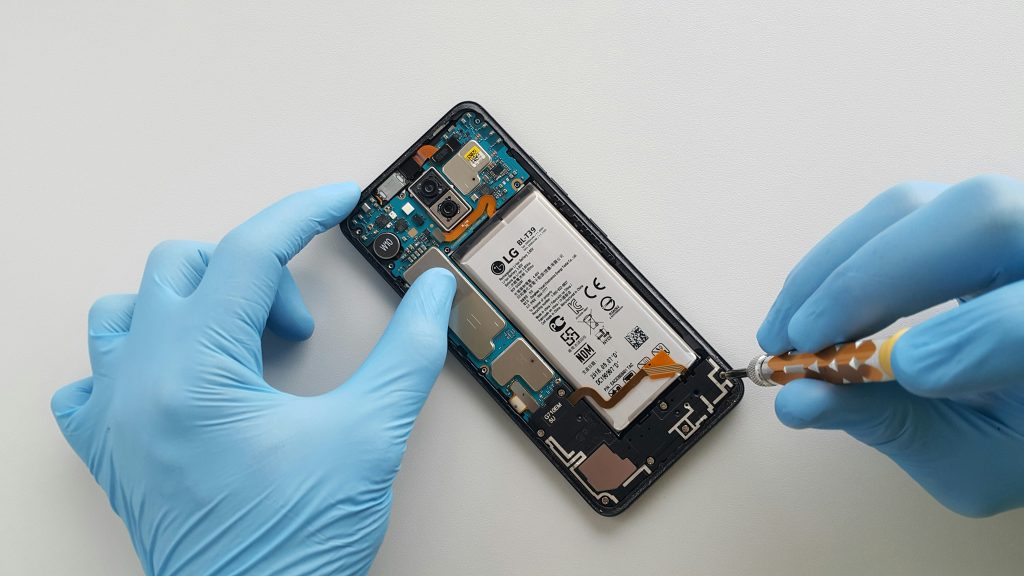
If there’s one business that will never run out of customers, it’s the phone business.
Think about it: almost everyone in Nigeria owns a phone, and every phone is one fall away from a cracked screen or one wrong charger away from a dead charging port.
This is why the phone repair business is not just profitable, it’s one of the most reliable skills to learn if you want daily cash flow.
In this guide, I’ll walk you through everything you need to know about starting a phone repair business in Nigeria in 2025, even if you have little or no experience.
Why the Phone Repair Business Is a Goldmine
Let’s be real: Everybody love phones. Even the person who complains about “no money” is using a phone worth ₦100k, ₦300k, or more.
And here’s the fact: phones will always spoil.
Screens will crack.
Charging ports will fail.
Batteries will get weak.
Software will freeze.
This is why the business is evergreen. Every single day, someone, somewhere in Nigeria is looking for a “phone repairer near me.”
But let’s not exaggerate. Phone repair is not “easy money.” You don’t just wake up, buy a screwdriver, and become rich. There’s skill to learn, tools to get, and customers to win over. The beauty is, you can start small and grow big.
Myths People Believe About Phone Repair
Before I go into the how-to, let me clear three lies people believe about this business:
“You must be a tech genius.”
Wrong. You don’t need to know rocket science. I wasn’t the smartest in school. I was an average student. In fact, if it was by mathematics, I’d never have touched phone repair. The skill is learnable, step by step.
“You need millions to start.”
No. I know people who started with less than ₦50k and today have shops worth millions. Some of us with just our screwdrivers set. Start small, grow with time.
“It’s a poor man’s hustle.”
Big lie. The top repairers you see driving nice cars today? They started from “umbrella level.” This business feeds families, builds houses, and pays school fees. Don’t let pride deceive you.
Skills You Actually Need
Let’s not sugarcoat it. To survive here, you need three sets of skills:
1. Technical Skills
How to open and close phones safely.
How to change parts: screens, batteries, charging ports.
How to fix software issues (hanging problem, hard reset).
How to troubleshoot common Android problems.
(Relax — these are the exact things I teach in my Phone Repair Business School. You won’t be left alone to figure it out.)
2. Customer Handling Skills
This one is even more important than technical. You can be the best repairer, but if customers don’t trust you, you’re finished. Simple habits like:
Returning old parts after repair.
Explaining what you did in plain language.
Avoiding any dubious act.
These little things are what make customers stick.
3. Business Skills
You’re not just fixing phones. You’re running a business. That means you must:
Price properly.
Keep records.
Learn how to market yourself.
Plan for growth (maybe sell accessories later).
The Tools You Need to Start
Many beginners get stuck here. They think they must buy every tool in the market before starting. That’s false. Start with the basics, then upgrade as you grow.
Here’s a list (as of 2025, Nigerian market price range):
Phone repair toolkit (screwdrivers, tweezers, pry tools): ₦5k – ₦20k
Heat gun / blower/ rework Station: ₦20k – ₦75k
Multimeter: ₦5k – ₦10k
Power supply machine (optional beginner upgrade): ₦70k – ₦100k+
Small repair table & chair: base on your budget
So, with less than ₦100k, you can actually set up a beginner-level workshop.
Tip: Don’t tie your money down with too much stock at first. Buy replacement parts when customers request them.
How Much Do You Really Need to Start?
This is the question everyone asks. And the answer depends on your level.
Street-Level Starter (₦5k – ₦50k):
You can start with just a basic toolkit, maybe an umbrella space or even working from your home. At this stage, you’re targeting friends, family, neighbors, community members, and colleagues at work.
Shop Setup (₦100k – ₦500k):
A small rental shop, proper tools, maybe a little stock of parts like screens and batteries. Good effort in marketing advertisement. Now you’re seen as “professional.”
Standard Setup (₦1m+):
A well-equipped workshop with advanced tools, big stock of spare parts, signboard, and maybe apprentices working under you.
The mistake people make is waiting until they have millions. Start small, then upgrade.
Where Do You Learn the Skill?
Apprenticeship: Old-school style, learn under someone. Good, but sometimes slow, and some bosses don’t teach everything.
Online/Offline Courses: Fast and structured. You know exactly what to learn and in what order. (That’s why I built this school — no confusion, just step by step.)
Self-Practice: Using damaged phones to practice. This works if you’re disciplined.
The truth is, whichever you choose, you must practice. Watching videos without touching phones won’t make you a repairer.
How to Get Customers Fast
Here’s the secret: your first customers are already around you.
Start with family and friends. Do good jobs for them, they’ll refer you.
Use social media. Post before-and-after pictures of phones you repair. Even if it’s just your cousin’s phone, show it off.
Be visible. Print a small banner or flyer. Put it where people can see.
Build trust. Return faulty parts. Call customers to check if their phone is still okay after 2 days.
These little acts are what make people say: “That guy is different.”
How Much Can You Earn? (Real Numbers)
Let’s break it down realistically.
Screen replacement profit: ₦3k – ₦150k
Battery replacement profit: ₦2k – ₦30k
Charging port fix profit: ₦1k – ₦12k
Software reset/unlock: ₦2k – ₦10k
Now imagine you do just 3 repairs a day:
Let’s ₦10k – ₦20k profit daily. Multiply by 25 working days, and you’re looking at ₦250k – ₦500k a month.
And remember, this is just repairs. Add accessories or phone sales, and the money multiplies.
Mistakes Beginners Make
Underpricing themselves just to get customers.
Not learning properly before starting. (Customers will expose you.)
Bad attitude — rude, arrogant, or careless with people’s phones.
No records — they can’t even tell how much they made last week.
Fear of social media. They hide their skill instead of showing it.
A Day in the Life of a Phone Repairer
To make this real, let me paint a picture of a beginner.
It’s 9 am. You open your small shop. By 9:30, a student walks in with a cracked Infinix screen. You check, give him a price, and collect part payment to buy the screen.
By 12 pm, a bike man brings his phone with charging issues. You replace downboard and charge him ₦4,000. Quick win.
By evening, you’ve done 3–4 jobs, made ₦10k+ profit, and already booked two customers for the next day.
That’s the flow. Every day is different, but once people know you, jobs never stop coming.
FAQs About Starting a Phone Repair Business
Q: Do I need to be very educated?
No. You just need willingness to learn. Some top repairers didn’t even finish secondary school.
Q: What if I spoil someone’s phone?
It happens to everyone. Be honest with the customer. Sometimes, the damage was already there. Other times, you may need to replace the part. Integrity is key.
Q: Can women do this business?
Of course. In fact, female repairers stand out more because people trust them quickly.
Q: Do I need constant electricity?
It helps, but you can start with a small generator or even do light repairs that don’t require heavy power.
Q: What if customers don’t come?
Then you market yourself harder. Social media, flyers, friends, neighbors. Don’t sit in silence waiting for miracles.
Final Word
Phone repair is not just a hustle. It’s a skill that can feed you for life if you do it well.
Don’t wait until you “have everything” before starting. Start with what you have. Learn properly. Build trust. The customers will come.
And if you want to save time and avoid all the mistakes I made, check out my resources:
👉 Phone Repair Business School Course
👉 Phone Tools & Starter Kits
This is 2025. The earlier you start, the faster you grow.